


Saving Elli by Doug Gold - Extract

Read an extract from Saving Elli by Doug Gold.

22 February 1941
Abraham Szanowksi had had his eye on the ring for some time. It was a beautiful piece, yellow gold with a cluster of tiny sparkling diamonds and a large round, brilliant-cut centre stone — the very best cut, colour and clarity, according to his jeweller friend Isaac Kaplan. Gita, Abraham’s wife, had celebrated her twenty-seventh birthday exactly a week before, but Abraham had been confined to bed, too ill to leave the apartment, so had not been able to get her birthday present until now. He wasn’t quite sure he could afford the ring, but Gita deserved it. And business had been good, even under the tightening grip of the Nazi occupation of Holland and the relentless persecution of Jews.
Today was a Saturday — the day of rest, or Shabbos, for Ashkenazi Jews like Abraham — and he dressed for the synagogue: a smartly tailored, single-breasted grey herringbone coat with three buttons down the front and two large flap pockets. A Star of David was sewn next to the left-hand lapel. By 9 a.m. he was ready to descend the narrow staircase from their apartment above his tailor’s shop on Eerste van Swindenstraat in east Amsterdam. He would look at the ring one more time. Truth be told, he had already made up his mind: he would buy it for his wife.
Isaac’s shop was nestled in the Jewish Quarter and, if he hurried, Abraham could purchase the ring and still make it home before they needed to leave for the synagogue. He hadn’t told Gita where he was going; he wanted the gift to be a surprise.
‘I have some business matters to attend to,’ he called over his shoulder as he bounded down the stairs. ‘But I’ll be back in time for the Shabbos service. And I haven’t forgotten the family lunch.’ The lunch for their extended family — his brother Jacob and wife Cilly, and their two children, — was to celebrate the birth of Elli, their second child.
The thirty-three-year-old whistled as he made his way towards the jeweller’s, finding happiness today despite all the misery being heaped on Jews. Ten days earlier the Jewish Quarter had been barricaded with barbed wire and checkpoints set up around the perimeter. The uneasy peace that followed seemed to settle the neighbourhood, but tensions still simmered below the fragile surface. Occasional outbreaks of violence cracked the illusion of calm. Still, everything seemed peaceful on this Saturday morning as Abraham strolled through Waterlooplein square. The usual bustle of the local market allayed any fears of unrest.
Outside Isaac’s shop, he stopped abruptly, startled. His eye had caught the hand-painted sign with its crude, black letters screaming ‘Jews Get Out!’. But that wasn’t what had disturbed him. Sickening, racist slogans like this were common enough — he himself had only just scrubbed ‘Jewish Scum’ graffiti from his own shopfront, and the week before it had been ‘Go Home Yiddish Bastards’. This was different. A grotesque image had been scrawled across the window: a Star of David dangling from a gallows pole. Below it, words that bred hatred: ‘Exterminate All Jews’. A death threat; altogether more sinister.
The bell jangled briskly as Abraham pushed open the swing door. He pointed to the paint-splattered window. ‘Will they ever stop?’ he asked Isaac, with a despairing sigh. ‘When will this madness end?’
Isaac looked up from behind the counter and shook his head. ‘When these cursed Nazis are defeated and run out of our country, that’s when. Every day, it’s abuse, intimidation, threats. The graffiti? That’s the least of my worries. It’s the violence that concerns me most.’
‘So true, Isaac. And our own people — the younger Jews in particular — they’re fighting back, and I fear that will just make things worse. Escalate the violence. Did you hear about what happened at the Koco ice cream parlour a few days ago?’
Isaac nodded.
‘An ammonia gas trap,’ Abraham pressed on, his voice tinged with admiration, ‘rigged up to the entry door. The second those German thugs forced their way in, the gas sprayed right in their faces.’
Isaac nodded again.
‘Temporarily blinded some of them, injured others. They say it was chaos.’
‘Yes, I’d heard that, too.’
It was Abraham’s turn to nod. ‘Ingenious and courageous, Isaac. But nothing good will come of it. Of that, I’m sure.’
‘You’re right, Abraham. And what about that NSB guy — the Dutch Nazi — Koot, Henry Koot . . .’
‘Hendrik,’ Abraham corrected.
‘Yes, yes, Hendrik Koot. Wounded by Jews who fought back after the Nazis started a brawl. Died, I hear. There will be repercussions for that. We should just learn to accept their draconian rules and try to live peacefully. Perhaps they’ll leave us alone if we don’t retaliate.’
‘Perhaps,’ Abraham said slowly, his voice full of despair, ‘but I doubt it. These Nazi fanatics hate Jews and everything we represent. They want to wipe us out. I’m not sure why, but they do. Look at the restrictions they’ve already imposed: firing Jews from civil service jobs and teaching, banning Jewish cultural performances. We can’t go to cafés or restaurants, parks, libraries, museums — oh, and so much more. It’s relentless. Every month there are new bans and controls. And I fear this is just the start.’ Abraham paused, almost forgetting the reason for his visit. ‘Just the start, Isaac.’
Isaac stared at the ground. ‘I can only hope you’re wrong, Abraham.’
Abraham opened his mouth to say more, but thought better of it. ‘Now, the ring, Isaac. Can I have another look at the ring?’
‘The ring. Ah, yes, of course.’ Isaac unlocked a display cabinet, placed the ring on a tray covered with black velvet and handed Abraham a loupe — a jeweller’s magnifying glass.
‘Take a look for yourself, Abraham. It’s a lot of money and I want to make sure you’re happy with what you buy.’
Abraham took the loupe and pressed it to his right eye, squinting as he examined the ring.
‘Note the clarity of the centre diamond; it’s flawless.’ Abraham nodded sagely, but in fact he had no idea how to tell a perfect diamond from a flawed one. Or a fake one, for that matter. The stones sparkled and danced in the sunlight, radiating a rainbow of colours: violets, reds, blues, greens and yellows — and that was good enough for Abraham.
‘I’ll take it,’ he declared.
‘You’ve made a wise choice, Abraham,’ Isaac said as he carefully placed the ring into a red box trimmed with gold.
‘You won’t regret it.’ This was no salesman’s talk; Isaac was completely genuine, known around the Jewish community for his honesty and integrity. Abraham counted out the guilders carefully, fingering each note as he slid it over the counter. He still wasn’t certain he could afford the ring, but Gita would love it. Of that he was certain. He slipped the box with the ring into his coat pocket; he would wrap it later. Gita’s surprise and delight when she opened her gift would be worth every guilder he had paid.
‘Thanks so much, Isaac. And for letting me come on Shabbos. I appreciate it.’
Isaac brushed off the gratitude with a wave of his hand.
‘It was nothing, Abraham. Anything for an old friend. I only hope you’re wrong about the Nazis ramping up the violence.’
‘So do I, Isaac. So do I.’ Somehow, agreeing with his friend gave him a glimmer of hope, but in his heart Abraham knew he wasn’t wrong.
———
As he hurried across the footbridge towards Jonas Daniël Meijerplein and the route home, Abraham hummed contentedly and from time to time stroked the tiny square box in his coat pocket to reassure himself it was still there. A smile slid across his lips as he imagined Gita’s reaction when she opened it.
Approaching the square of Meester Visserplein, he slowed, glancing into the window of a haberdashery shop. Using the glass as a mirror, Abraham smoothed his hair and straightened his tie. He was a tailor, after all, and liked to look his best when he was out and about. As he was about to turn away, however, he saw another reflection in the window — one that terrified him.
A mass of dark-green uniforms surging around the corner, marching towards him. The unmistakable sight of the Nazi Ordnungspolizei, dozens of them. In this neighbourhood that could mean only one thing: they were hunting Jews. His gut tightened; he had to get away. With no time to think, Abraham sprinted to the left — but his path was blocked. Soldiers on horseback and motorcycles with sidecars guarded the exits to the square; trucks with machine guns mounted on their cab roofs rolled through the side streets.
Breathing hard, Abraham raced back along Meester Visserplein, his eyes darting as he searched for an alleyway or an open door, anywhere to hide. Others were doing the same, pushing and shoving their way past one another in desperation. An elderly woman stumbled as someone pushed past, and fell to the ground, the contents of her shopping bag spilling out across the road. Abraham ran past, then stopped and turned back; no one else did. Breathless, he checked on the woman. She was okay. Around them, men were running in all directions, some dragging young boys behind them, all seeking a refuge they would not find. Escape was impossible: the Ordnungspolizei had blocked all exits and the open square offered no cover.
Abraham bolted towards the Portuguese Synagogue on Jonas Daniël Meijerplein, his only hope. But halfway there he froze, seeing his friend and fellow tailor, Arnold Groenteman, struggling with two Nazis.
‘Jewish scum!’ one screamed, his voice laced with venom.
He spat in Arnold’s face, then cracked him across the temple with a wooden baton. Arnold cowered, trying to shield himself, but another brutal blow sent him sprawling to the ground. The polished leather of a jackboot flashed in the sun as it lunged at Arnold’s head, making a sickening crunch as it smashed into his skull.
Abraham was raging inside, but there was nothing he could do. Arnold was lying on the ground, his body limp, motionless. Getting no reaction, the Germans soon tired of beating him and moved on to their next victim: an elderly man, stooped and frail, with only a walking stick to defend himself. His age was no defence: he was attacked with the same brutality as the young and healthy.
Abraham was out of options; he turned, desperately looking for shelter, but saw none. He ran, blindly, but before he could get very far three Nazis surrounded him. Abraham ducked as they closed in, narrowly avoiding one leathergloved fist, but the next strike landed — a vicious uppercut slammed into his jaw. Dazed, he tottered on his feet, trying to keep his balance. He moved to the right, blocking another blow with his arm. His assailant stepped to his left until they were eyeing each other. Abraham was gasping, blowing frosty breaths into the chill winter air. He darted the other way, losing his balance as he turned, but just as he steadied himself, something heavy — a metal rod — bashed him on the back of the head, this time knocking him on to the cobbled road. A haze clouded his eyes.
‘Worthless piece of shit!’ his attacker snarled, as he put his boot into Abraham’s ribs. Something snapped; his ribcage was on fire. He tried to stand, but another boot to the midriff knocked the breath from his lungs and sent him tumbling again.
Abraham’s gaze flicked to Arnold. He was still lying prone; not moving, his eyes glazed over staring straight at Abraham. Not a flicker of recognition. Nothing. A tiny wisp of misty air rising from his swollen lips was the only sign of life. Abraham had no time to reflect further; a steel-capped boot smashed into his jaw. His head jerked back, and a sharp pain radiated through his skull. He tasted blood, then spat out shards of tooth.
All around him, Jewish men were being rounded up; some beaten with truncheons, others with rifle butts, boots and iron bars. Most gave up without a fight. Hauled to his feet by two muscled thugs, Abraham was dragged across the square, toes scraping the paving. Blood trailed from his drooping jaw. He joined lines of men kneeling in submission, their hands planted on their heads. Glaring at their prisoners, the Ordnungspolizei levelled their rifles, threatening to shoot if anyone moved.
Someone did. A sudden movement caught Abraham’s eye as one terrified man broke free, sprinting towards Weesperstraat. The cackle of a single machine gun rattled through the morning air. Pigeons perched on poles and rooftops squawked and scrambled, as if they, too, feared being trapped in the Nazi net. The fleeing man fell. In running for his life, he had lost it.
Anyone who shifted their hands, even slightly, or squirmed to relieve the pressure on their knees was set upon by vicious Ordnungspolizei dogs or beaten until they collapsed. For over three hours they endured the pain, the cramp, the numbness and the muscle strain from kneeling on the unforgiving ground. When the men were finally ordered to stand, few could get their limbs to move — inviting yet another beating.
Dogs and rifles herded the prisoners to an adjacent residential street, used as a temporary holding pen. There they were held even longer. Abraham wasn’t sure how long; he had lost track of time.
Abraham cursed his bad luck. Had he not been sick the week before, he would have been nowhere near the Jewish Quarter. He would have given the ring to Gita on her birthday, and they would have been to the synagogue and enjoyed the celebratory lunch to follow. Instead, he was caught in this nightmare.
The sun was sinking by the time the trucks arrived. Abraham was thrust on to the deck of a canopied Opel Blitz. He spat out more blood. His jaw was throbbing, but at least it wasn’t broken. Through the mist of pain, he recognised two familiar faces — Ruben Löwenstein, an importer, and Fritz Rothstein, a kosher butcher — both good men, both going about their daily business, causing no harm, meaning no offence. A solemn nod passed between the three of them: an unspoken acknowledgement of their shared fate.
A glimpse of Arnold being lifted onto a Volkswagen truck brought some fleeting relief. His friend was alive. Arnold smiled at Abraham; a grim smile, but a smile nevertheless.
As the Opel spluttered into life, lurching forward with a sudden jolt, Abraham surveyed the carnage. Word had spread and the square was now filled with frantic relatives and desperate friends, a frenzied mass of chaos and confusion.
Women wailing and crying out for loved ones; children scouring the square for missing fathers; captured husbands shouting encouragement to their wives to stay strong; and a few, a reckless few, shouting abuse at the attackers from the safety of hidden alcoves.
Ruben’s voice broke through the din. ‘What’s happening? Why are they doing this?’
Fritz’s reply was filled with loathing. ‘Who the hell knows? The Nazis hate us, that’s for sure, but this . . . this is barbaric — worse than anything they’ve done before. So, no, I don’t know why.’
Abraham said nothing. He knew why: it was vengeance, pure and simple. The Germans were exacting their revenge for Jewish retaliation against Nazi atrocities. Abraham’s eyes roved around the square again. A wall of soldiers was now moving in unison, pushing the crowd back, driving them away from the square.
The truck rolled on, leaving distraught friends and relatives behind. Abraham had no idea where the Nazis were taking him but he was certain it would be somewhere he didn’t want to go.
Extracted from Saving Elli by Doug Gold.
Published by Allen & Unwin. Available now wherever books are sold.
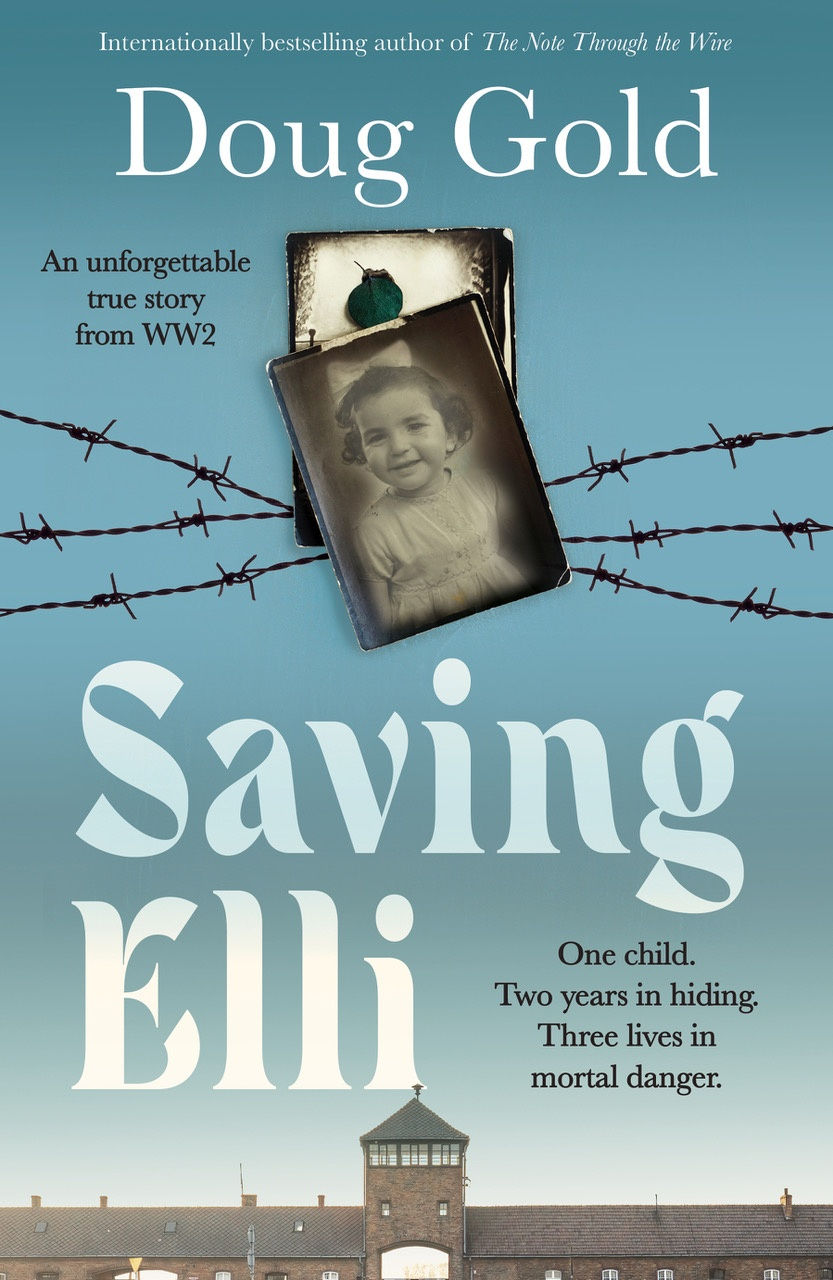
Saving Elli
by Doug Gold
A gripping true story of sacrifice, sabotage, survival and impossible choices, in the darkest days of war.
Comments