


Interview with Kate Wild author of The Red House

We speak with author of The Red House, Kate Wild.

In 2019, 19-year-old Warlpiri man Kumanjayi Walker lost his life in a police shooting in Yuendumu, Northern Territory. This took place inside what locals called the “red house”.
Constable Zachary Rolfe was charged with murder, the first Northern Territory police officer to face such charges in decades.
In The Red House Walkely Award-winning journalist Kate Wild tells the story about what that single, tragic moment reveals about Australia’s unfinished cycle of violence and how we move towards truth and reconciliation.
Read our interview with Kate below.
A&U: What first drew you to Kumanjayi Walker's story, and why did you feel it needed to be told in a book?
KW: The minute I heard the news of Kumanjayi Walker’s shooting I knew it would have huge implications right across the Northern Territory but potentially across the country, because the relationship between Aboriginal people and police has always been fraught in Australia. It’s a relationship that carries a lot of history, so every violent confrontation brings past conflicts back to life as well.
I knew that the conflict between Kumanjayi and Zachary Rolfe contained a lot more than what passed between them as individuals in a couple of minutes - and that’s what I was drawn to. What experiences had shaped their world views before that meeting? What assumptions about the other man’s intentions and worth did Kumanjayi and Rolfe carry with them?
The answers to those questions were layered and the only way to explore them thoroughly was in a book.
A&U: The Red House goes well beyond the events of that night. What did you want readers to understand about the circumstances that led to this tragedy and what this means to us?
KW: I wanted readers to understand that what happened between Kumanjayi and Rolfe was much bigger than these two young men. What they did to each other was part of an unfinished story in Australia’s history - one that every Australian has a stake in.
When I started the book in 2019 I felt that Australians were beginning to acknowledge the violence First Nations people have experienced - some of that from police, from other institutions, and always under the umbrella of government policies centred on controlling First Nations’ peoples lives.
I thought that how the public responded to Kumanjayi’s death and Rolfe’s murder trial would be a measure of how far we had travelled in accepting those difficult truths.
What I couldn’t have known in 2019 was that these questions about power would consume the world when George Floyd was murdered by police in the US six months after Kumanjayi was shot. I also couldn’t have predicted that the same questions would consume Australia in 2023 when we held a referendum on sharing power with First Nations people through our constitution.
By that stage I was no longer convinced that Australians were open to First Nations’ people’s contemporary and historical experience.
I wanted The Red House to help readers see that Kumanjayi Walker and Zachary Rolfe were the latest iteration of a struggle that Australia has been offered the chance to settle many many times in the last 260 years.
A&U: With SBS revisiting the death of Kumanjayi Walker in its new documentary series, why do you think it's important that Australians continue to engage with this story?
KW: Because the story isn’t over and we each have agency and a responsibility to heal the pain between Black and white Australians. There are so many great relationships that deserve to be celebrated but we will only grow up as a country when we address that pain.
WEH Stanner, an anthropologist used the word “Everywhen” in the 1950s to describe a concept of time explained to him by Aboriginal people in the Northern Territory. In the Everywhen, the past, present and future are all happening at once.
That means that everything from the past is still alive in what we do now. So we can’t build better futures until we recognise the past.
And that’s why we all have to stay engaged.
2.6 Seconds by Blackfella Films is an extraordinary documentary series - a truly world class piece of journalism and film making.
There isn’t a single answer to any of the questions The Red House or 2.6 Seconds raise. But being open to perspectives other than the one you already hold is a really important way of building the common ground we need to find.
A&U: What do you hope readers take away from The Red House, particularly those who may not have thought deeply about these issues before?
KW: I hope that people recognise themselves somewhere in the book in a thought they’ve had or a question they’ve been afraid to ask, and know that not having the answers is OK but that part of discovering a response is being willing to engage from a perspective or point of view they might normally dismiss.
There is so much information coming at us every day and so many things we’re meant to have opinions about, that it is easy to rush to a self-protective ‘position’ on complex problems just to be ‘done’ with other people’s troubles so we can get on with surviving.
There are many ways to understand Kumanjayi Walker and Zachary Rolfe’s story. I’ve collected the perspectives of people living in the middle of the conflict that Kumanjayi and Rolfe are part of, to invite readers to turn their head just a few degrees to see if there’s something they are missing. I think if we are willing to step into no man’s land we have a better chance of hearing each other.
It’s not a comfortable place but it’s quieter - and a lot more interesting than the alternative.
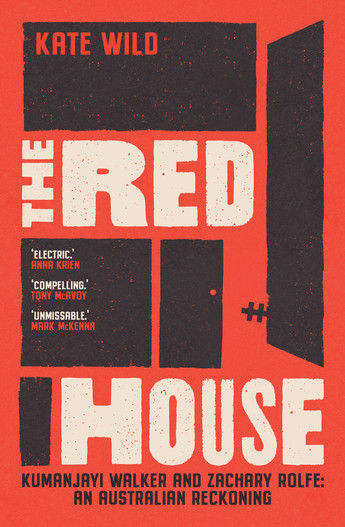
The Red House
by Kate Wild
How the fatal shooting of Kumanjayi Walker exposes the power of race in Australia, from Walkley Award-winning journalist Kate Wild.
Comments